Restoring a Property After a Cannabis Farm in Hastings
This property in Hastings had been broken into and taken over, with the entire building, six floors from top to bottom, converted for the cultivation of cannabis.
Following the police investigation and handover, the property was left in a condition that required immediate attention before it could be considered safe, secure, or suitable for sale or letting.
Situations like this are becoming increasingly common, particularly where properties are left empty or lightly monitored. While the enforcement side of these incidents quite rightly sits with the police, once their investigation is complete the responsibility quickly shifts back to the owner. At that point, the focus is no longer on what happened, but on how the property is recovered and brought back under control.

The condition on handover
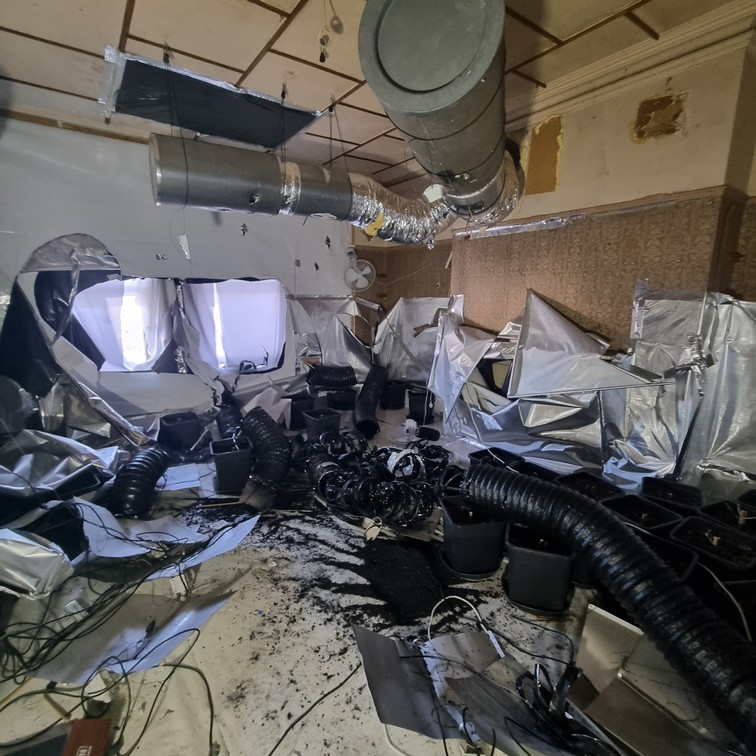
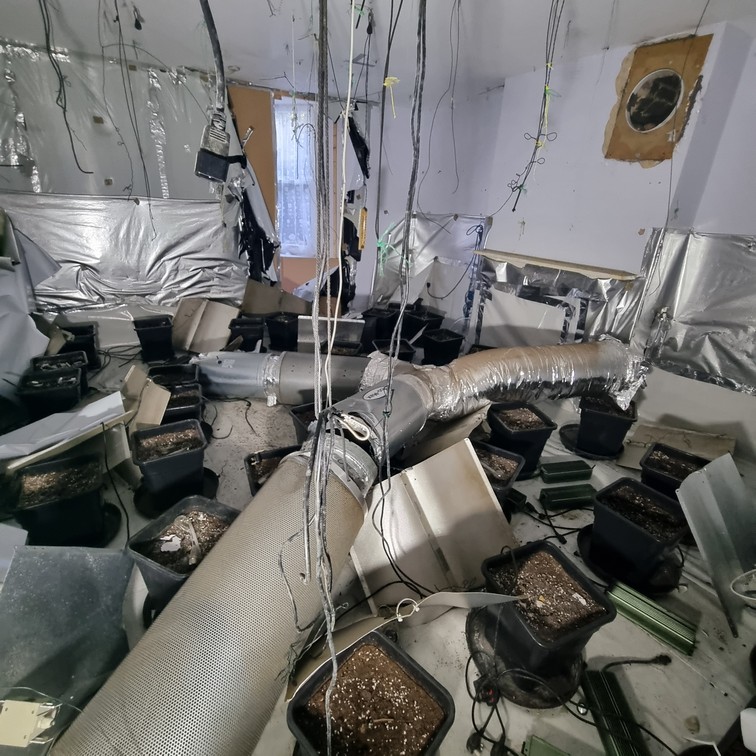
When we first attended the property, it was clear that extensive internal alterations had been made. Temporary electrics had been installed throughout, along with ducting, insulation and plant equipment. Walls and ceilings had been cut into, floors damaged, and services interfered with to support the growing operation.
Properties used in this way often present multiple risks. Electrical installations are rarely safe or compliant, water systems may have been altered, and fire risks are significantly increased. Before any form of restoration or marketing can be considered, the property must first be made safe to enter and secured against further unauthorised access.
Immediate priorities
Once the police had completed their work and handed the property back, our first role was to stabilise the situation. This included securing access points, ensuring the building could be safely entered, and carrying out an initial assessment of the condition and extent of the damage.
At this stage, speed matters. Empty properties that have already been compromised are at increased risk of further break-ins, vandalism, or unauthorised access. Securing the building and presenting clear signs of control is an important first step in preventing additional problems.
We also documented the condition of the property, providing the owner with a clear record of what had been left behind and what remedial actions were likely to be required. This is often useful for insurance discussions, future contractors, or prospective purchasers.
Clearance and making safe
In cases like this, a full restoration is not always the immediate goal. In this instance, the property was sold relatively quickly, so the focus was on removing hazards, clearing equipment, and making the building safe and presentable enough to allow viewings and further decision-making.
This involved the removal of growing equipment and associated materials, careful handling and disposal of waste, and addressing obvious safety issues. Temporary electrics and exposed wiring were identified, damaged areas noted, and steps taken to reduce immediate risks.
The aim at this stage is not to over-engineer a solution, but to take a practical, proportionate approach that supports the owner’s next steps, whether that is sale, further refurbishment, or onward management.
Supporting owners through the process
For most property owners, discovering that their building has been used in this way is both frustrating and unsettling. There is often a sense that control has been lost, particularly if the property was empty at the time.
Our role is to help owners regain that control. By attending promptly, dealing with the immediate issues, and providing clear information about the condition of the property, we help remove uncertainty and allow informed decisions to be made.
Every situation is different. Some properties go on to require extensive refurbishment, while others, as in this case, are stabilised and sold on relatively quickly. The key is responding appropriately to the circumstances, rather than applying a one-size-fits-all approach.
A growing issue with empty properties
Properties that are empty, poorly secured, or infrequently checked are far more likely to be targeted for this type of activity. While not every empty property will experience issues, those that do often escalate quickly and with significant cost implications.
Early intervention, prompt response after handover, and a clear plan for recovery can make a substantial difference to outcomes. Even where full restoration is not immediately required, taking control early helps prevent further loss and keeps options open.
Final thoughts
Cannabis farms and similar incidents are not just a problem for large landlords or national asset managers. They affect individual owners, small investors, and mixed-use buildings just as frequently.
Once the authorities have completed their role, the focus must shift to recovery. Securing the property, addressing immediate risks, and supporting the owner through the next stage, whether that is sale, letting, or further works, is where experienced, practical property support makes a real difference.